Committing to Change an Old Habit

November 24, 2008

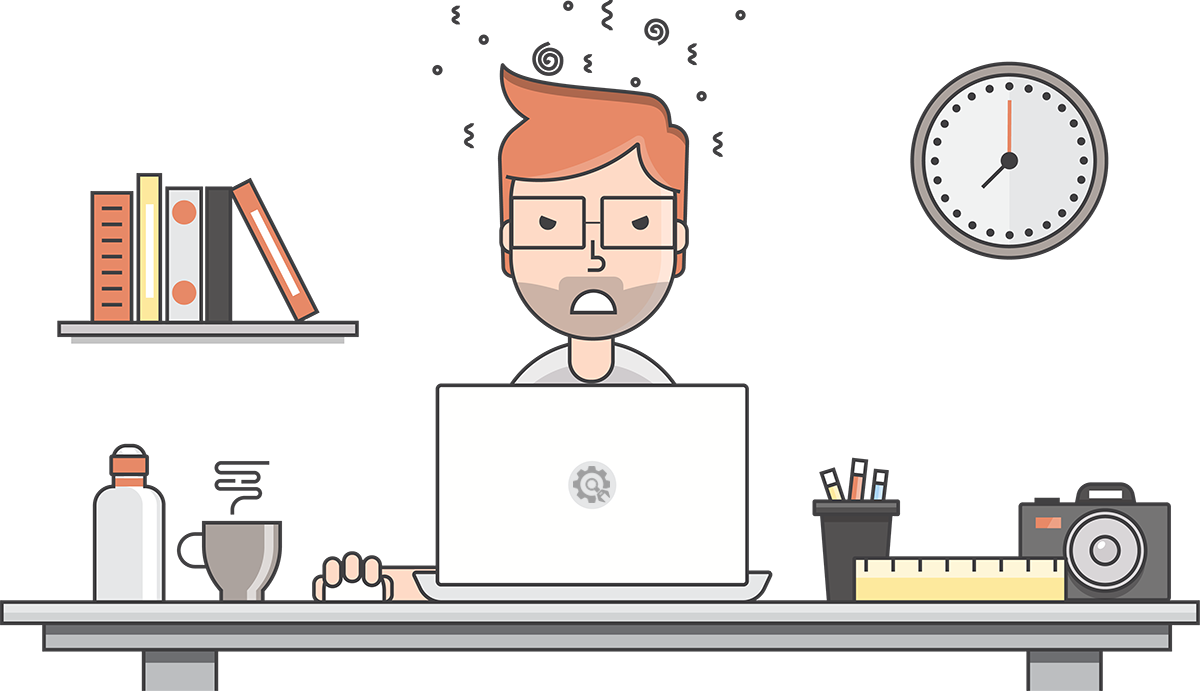
A coaching client I was working with this week, who has an ADHD diagnosis, wanted to make a commitment to himself to increase his phone calls to prospective clients; sounds good, except he has tried this more than half a dozen times without successfully following up.

This time I encouraged him to not make the commitment. I felt he still didn’t have a realistic chance of fulfilling it, and if he had made the commitment and not followed through on it again, the value of all his commitments would just continue to erode.

In my coaching, I’m always looking for ways to help my clients bring a higher level of awareness and motivation to the task of changing their habits. A commitment is a classic and sometimes powerful method, but part of its potential power is in its ability to draw attention to a situation – to create a “different than life as usual” moment.

Making a commitment stand out – catch your attention – means it needs to be thought through carefully and it has to marshal your best efforts. Taking the time to make a deliberate decision before making a very specific commitment, even to yourself, raises the value of your commitments and the chances they will be effective.

My client and I spent the last half of our session identifying what strategies he could use to increase the odds that he would successfully follow through this time. He ended up making a commitment to do something he was sure he could accomplish, create the tracking sheet he would use when he was ready to move forward on the phone calls. If he is successful at completing the new form, his subsequent commitments may be even more powerful motivators.

Don’t over commit!

ADHD Medications – The Basics

November 23, 2008

I recently delivered a teleconference for ADDA, the Adult Attention Deficit Disorder Association, on ADHD Medications and wanted to share with you some of the common questions. “Dr. Cerulli, how do I know if I need medication?” My response: First know that medications should not be used as the only treatment intervention for ADHD, but rather as part of an integrated approach to care. When deciding on medication, ask yourself if your ADHD symptoms are getting in the way in your life at home, at work, at school or in your relationships. Are you meeting your personal goals? Are your unique abilities, talents, and wonderful attributes being expressed or getting lost among your ADHD symptoms? If others are noticing more about your ADHD than about you, it may be time to consider a medication consultation.

Medications can be very safe and effective. In fact stimulant medications are helpful in 70 – 75% of patients with ADHD. Careful diagnosis, medication management, medication adjustments, and follow up medical visits will impact how successful this endeavor will be for you. Take time in finding a provider you can comfortably work with. This is an important long term relationship!

Another common question was “How long will it take before I notice if a medication is working?”. The answer varies depending on what type of medication you are taking for your ADHD. Stimulant medications work immediately, just like caffeine in your morning coffee. They work right away but only last approximately 4-12 hours. However when a doctor starts you on a stimulant, they generally begin a low doses so it may take a few weeks to a few months to adjust the dose or the type of stimulant to get a good response.

Unlike stimulant medications, the non-stimulants do not work right away. They take time to build up in your body, usually over the course of 2-4 weeks to begin having beneficial effects. An example of a non-stimulant ADHD medication is strattera, also called atomoxetine. The non-stimulant medications may be a good option for someone who cannot tolerate side effects from a stimulant or has medical problems such as seizures that may be negatively impacted by stimulants.

For a good overview of medication basics and ADHD in general, take a look at www.insideADHD.org  I find this website to be very user-friendly and accurate. You can link to medication information directly from the homepage. Also check out their graphics on the brain and ADHD.

A Drug-free Intervention for ADD/ADHD and Co-existing Conditions

November 9, 2008

Rebecca Shafir M.A.CCC

Over the last several years mental health providers have been receiving a growing number of requests for effective treatments that did not involve medications. Side effects, cost, ineffective results or an inability to tolerate the meds were some of the concerns that drove these requests.

With roots in the classic medical model I was suspect of non-traditional approaches lacking strong double blind studies, or interventions that required more time, money or vigilance than our patients could spare. However, with the number of requests for alternatives hovering around the 30-40% mark, that was enough incentive to jump start my quest for answers.

Neurofeedback, a form of biofeedback, showed the most promise for satisfying patient requests for alternatives. After much study and interviewing of experts, one method stood out as most appropriate for the on-the-go ADD community – Low Energy Neurofeedback System or LENS. This system gently conditions healthier brain wave (EEG) patterns using weak electromagnetic signals as a carrier wave for the feedback to assist in reorganizing brain physiology. This method requires no work on the client’s part and is relatively quick and cost-effective to administer. Other forms of neurofeedback require active participation (an operant conditioning model) and months of endurance on the client’s part. LENS, however, is a passive process that takes only minutes per session. And, as with other kinds of neurofeedback, LENS is harmless and non-invasive. 

If people want more details on LENS I can supply them. Suffice it to say, that over the last 3 years in offering LENS, 75-80% of my patients reported significantly improved sleep, energy, mood, clarity; and reduced headaches. With children I noticed its “enabling” effect to implement strategies which were previously unsuccessful. LENS is just one of many answers to the growing requests for effective treatment options. For more information see www.ochslabs.com

ADHD Success Tip: First Understand Yourself

November 5, 2008

ADHD is just a small piece of the puzzle.  When someone has been diagnosed, or is thought to have ADHD, it is really just a way of understanding:

  • Who we are
  • What we need
  • How we are different

For me, there is nothing more important than recognizing how different and unique we truly are.  Whether it’s ADHD or not, every human being is different.  Every human being has challenges, and struggles, and needs support around certain areas of life.

That’s why I hope all of my clients (and you as well) choose to focus on differences and NOT the labels that so many people get caught up with.

Just the other night, our group got together for dinner.  We were talking about ADHD, as we often do, and I brought up this idea of NOT focusing on the labels…  Of NOT focusing on the diagnosis.  I find that it only HOLDS people back.

One of my colleagues offered a different perspective.  She said, “Some people need that diagnosis.  It helps them understand or give some type of reason for why things might suddenly be changing.”

That’s where we agreed!

For me, the shared message is about understanding ourselves… This means, we slow down and recognize our limitations.  And by doing so, it does not make us weak…  It does not mean we are broken…  In fact, it means we are strong.

Recognizing who we are, and where we need support is the very fabric for working towards success!

If you are looking for more information on understanding differences, and how ADHD can play a role, please be sure to sign up for our FREE ADHD Welcome Pack:

Name:
Email:

Services

Cerulli & Associates is an integrative, holistic treatment center with a focus on health and wellness. Our unique style and approach takes into consideration the entire person, and NOT just the problems they are struggling to manage.

Continue reading...

Programs

We offer a variety of coaching programs, training, and support groups both on-site and online. Our goal is to make sure you have access to the information you need, when you need it, and when you are able to access it.

Continue reading...